
Top Foundation Repair Materials For Safe And Effective Home Stabilization
Explore essential products that provide strong, reliable support to stabilize your home’s foundation and protect your investment.
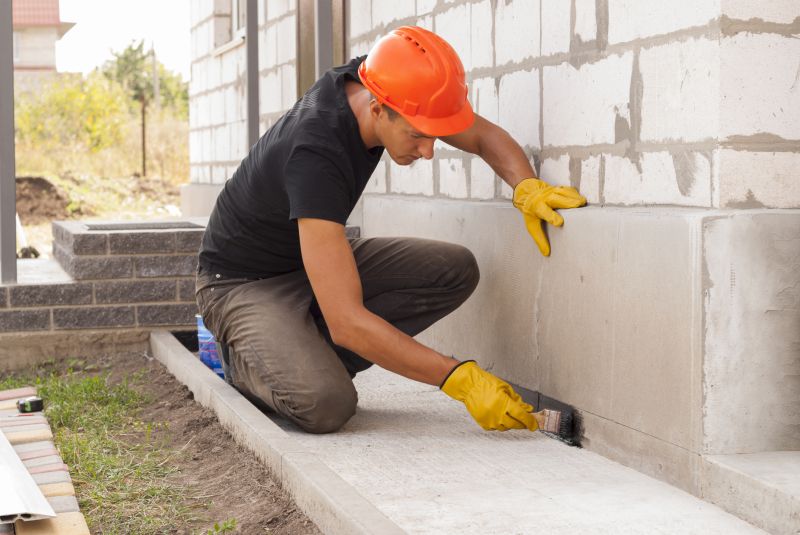 Foundation repairs are an essential aspect of maintaining the stability and safety of a building, especially in regions like Lexington, KY, where soil conditions and weather patterns can influence structural integrity. There are numerous products available designed to address various foundation issues, from minor cracks to significant shifts. These products are crafted to provide support, stabilize, and reinforce foundations, helping to prevent further damage and prolong the lifespan of the structure. Selecting the right repair products depends on the specific needs of the property, soil conditions, and the extent of the foundation problem.
Top Overall Option
Hydraulic Push Piers
Hydraulic push piers are a versatile foundation repair solution that can be driven deep into stable soil layers to lift and stabilize a sinking or settling foundation. They provide a reliable, minimally invasive method for underpinning and are suitable for various soil conditions. Properly installed, they can offer long-term support, helping to restore the foundation's stability without extensive excavation.
Types of Products For Foundation Repairs
Helical Pier Systems
Helical piers are screw-like devices installed beneath the foundation to provide support and stabilization, especially useful in variable soil conditions.
Slab Jacking and Mudjacking
This method involves injecting a grout mixture beneath a concrete slab to lift and level it, often used for sidewalks, driveways, and garage floors.
Carbon Fiber Reinforcement
Carbon fiber strips are applied to interior walls to reinforce cracks and prevent further movement, offering a non-invasive repair option.
Epoxy Injection
Epoxy resins are injected into cracks to bond and seal them, restoring strength and preventing water intrusion.
Underpinning Piles
Piles are driven deep into the ground to support and lift a sinking foundation, suitable for severe settlement issues.
Steel Push Piers
Steel piers are driven into stable soil layers to lift and stabilize foundations, often used in conjunction with hydraulic systems.
Concrete Crack Repair Kits
These kits include sealants and fillers designed to repair minor cracks and prevent water infiltration.
Soil Stabilization Products
Chemical additives and grouts used to improve soil bearing capacity and reduce settlement issues.
Foundation Anchor Bolts
Anchors are installed to secure the foundation to the surrounding soil or structure, providing additional stability.
Vapor Barriers and Moisture Control
Products aimed at controlling moisture levels around the foundation to prevent soil movement caused by water fluctuations.
Drainage Systems
Proper drainage solutions to divert water away from the foundation, reducing pressure and erosion risks.
Polyurethane Foam Injection
Lightweight foam injected into voids beneath slabs or foundations to lift and stabilize without extensive excavation.
Popular Choices
Often selected for their ability to lift and stabilize foundations in various soil conditions, these piers are a common choice for many repair projects.
Known for their screw-like installation, they are frequently used in residential and commercial foundation repairs.
A popular method for leveling uneven concrete surfaces with minimal disruption.
Widely used for interior crack stabilization due to its ease of application and effectiveness.
Commonly employed for sealing cracks and restoring structural integrity in concrete foundations.
Favored for their strength and ability to lift and stabilize heavily settled foundations.
Often chosen for quick lifts and filling voids beneath slabs with minimal disturbance.
Popular for managing water flow around foundations to reduce soil movement and pressure.
Used to improve soil conditions, these products are frequently part of comprehensive repair strategies.
A common method to secure foundations in place and prevent shifting.
Understanding the different types of foundation repair products can help homeowners and contractors make informed decisions. Some products are designed for temporary stabilization, while others offer long-term solutions. Proper application and compatibility with the existing foundation are crucial to ensure effectiveness. It is advisable to consult with a foundation specialist to assess the site conditions before choosing a product or repair method.
In Lexington, KY, where clay soils can expand and contract with moisture changes, selecting appropriate foundation repair products becomes even more important. Properly chosen products can help mitigate the effects of soil movement, prevent further cracking, and maintain the structural integrity of the building. Regular inspections and timely repairs using suitable products can save property owners from costly damages in the future.
Overall, foundation repair products range from simple patching compounds to sophisticated underpinning systems. The key is to match the product to the specific problem, ensuring it provides adequate support and durability. Investing in quality repair materials and professional installation can make a significant difference in the longevity and safety of a building.
Key Buying Considerations
- Assess the extent and type of foundation damage to determine suitable repair products.
- Consider the soil conditions and moisture levels in your area, as these influence product effectiveness.
- Evaluate whether the repair requires lifting, stabilization, or crack sealing to choose the right solution.
- Ensure compatibility of the repair product with the existing foundation materials.
- Look for products with proven durability and long-term stability, especially in climates like Lexington, KY.
- Determine if the repair method is minimally invasive or requires extensive excavation, based on property preferences.
- Check for professional installation options and warranties offered with the products.
- Consider the cost implications, including materials and labor, for a comprehensive repair plan.
- Review local building codes and regulations in Lexington, KY, to ensure compliance.
- Prioritize products that facilitate water management to prevent future foundation issues.
- Think about future maintenance needs and whether the product allows easy inspection or repairs.
- Select products that are versatile enough to address multiple foundation concerns if necessary.
- Evaluate the manufacturer's reputation and customer reviews for reliability and support.
- Assess the environmental conditions and potential for soil movement to choose appropriate solutions.
- Consult with foundation specialists to identify the most effective and suitable products for your specific situation.